
When a website, platform, or online service provider refuses to issue a refund, it can feel like you’ve hit a dead end. More worse, if you become a victim of scam. This situation is common not only with online shopping sites, but also with investment platforms, gambling websites, subscription services, and digital products.
The important thing to understand is this:
- A refusal doesn’t mean your money is gone.
- In many cases, you can still recover it, if you act strategically.
This guide explains exactly what to do when a platform denies your refund request.
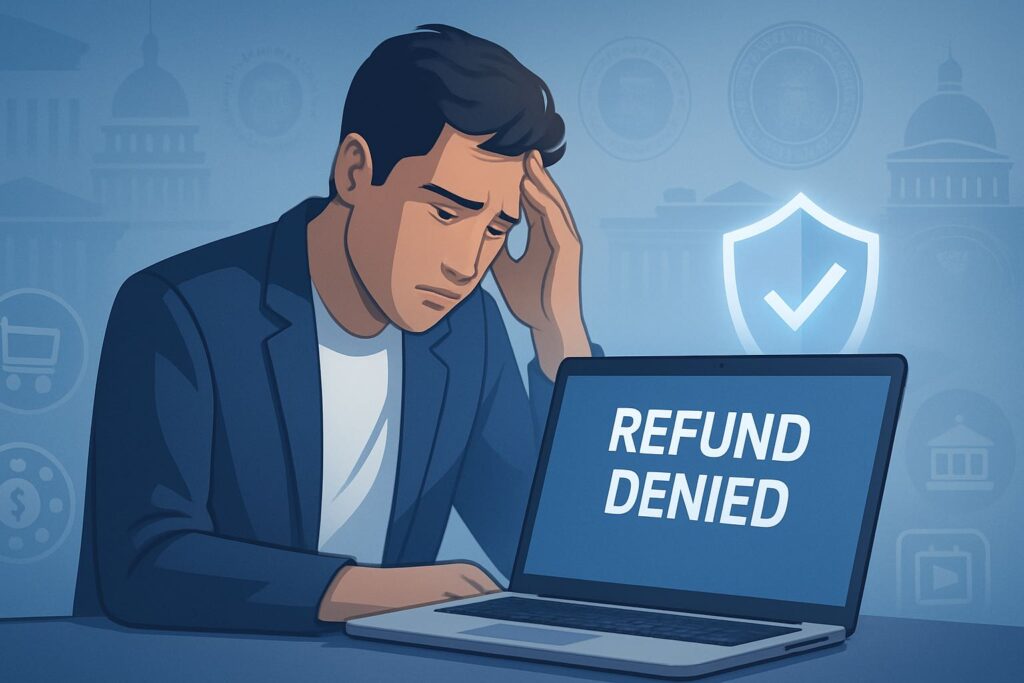
Why Refund Requests Get Denied?
Before taking action, it helps to know why platforms refuse refunds:
- Strict, confusing, or misleading refund policies.
- Claims that you violated their terms.
- Delayed responses or no response at all.
- Withdrawal restrictions (common in investment/gambling platforms).
- Intentional avoidance (especially on low-trust or suspicious websites).
Even if their reason sounds “official,” it doesn’t mean it’s valid or final.
Step 1: Collect Strong Evidence
Start by gathering everything related to your transaction:
- Payment receipts or transaction IDs.
- Emails, chat logs, or support replies.
- Screenshots of promises, offers, or terms.
- Proof of non-delivery, blocked withdrawals, or poor service.
This step is critical because every escalation depends on evidence.
Step 2: Escalate Your Request Within the Platform
Before going external, try pushing further internally:
- Ask for a supervisor or escalation team.
- Contact them through multiple channels (email, live chat, social media).
- Send a clear, formal refund request with evidence attached.
Sometimes front-line support denies requests automatically, but escalation can lead to different results.
Step 3: Dispute the Payment (Your Strongest Option)
If the platform still refuses, your most powerful move is to go through your payment provider.
What Is a Payment Dispute or Chargeback?
A chargeback or dispute allows your bank or payment provider to reverse the transaction, without needing approval from the website or platform.
When You Can Use It?
- Product or service was not delivered.
- Withdrawal requests are blocked.
- Misleading or false claims were made.
- Refund was unfairly denied.
- Unauthorized charges occurred.
Important: A refund is their choice.
A dispute forces an investigation.
Step 4: Contact Your Payment Method Provider
Your recovery chances depend heavily on how you paid:
Credit Card
- Strongest protection.
- Easy to file disputes.
- Often favors the customer.
Debit Card / Bank Transfer
- Still possible to dispute.
- Must act quickly (timing matters).
Digital Wallets (e.g., PayPal)
- Built-in dispute systems.
- Can escalate claims internally.
Cryptocurrency
- Usually non-reversible.
- Recovery is extremely difficult.
- Focus on reporting and prevention.
Step 5: Report the Website or Platform
If your refund is still denied, report the platform to increase pressure and protect others.
You can file complaints with:
- Consumer protection agencies.
- Financial regulators (for investment platforms).
- Gambling authorities (for betting sites).
- Scam reporting platforms.
This step may not always return your money directly, but it helps trigger investigations and warnings.
Depending on the type of website or platform involved, you can report the issue to the appropriate official authorities below to help escalate your complaint and support further investigation.
1. econsumer.gov
- Works for international scams & foreign websites.
- Shared with consumer agencies in 60+ countries.
- Ideal when the platform is outside your country.
2. International Consumer Protection and Enforcement Network
- Network of 70+ global consumer authorities.
- Helps coordinate action against cross-border fraud.
3. Federal Trade Commission (United States)
- Main authority for online scams, fraud, deceptive websites.
- Complaints are shared with law enforcement databases.
4. Consumer Financial Protection Bureau (United States)
https://www.consumerfinance.gov/complaint/
- Best for:
- Investment platforms.
- Payment issues.
- Financial fraud.
5. U.S. Securities and Exchange Commission
- For investment scams, crypto fraud, trading platforms.
6. FBI Internet Crime Complaint Center (United States)
- For:
- Online fraud.
- Hacking.
- Scam websites.
7. USA.gov Consumer Complaints
https://www.usa.gov/online-purchase-complaints
- Directs complaints to:
- State Attorney General.
- Consumer protection offices.
- FTC.
8. Citizens Advice (United Kingdom)
https://www.citizensadvice.org.uk
- First step for complaints.
- Can escalate to Trading Standards.
9. Action Fraud (United Kingdom)
https://www.reportfraud.police.uk/
- For:
- Scam websites.
- Fraud platforms.
10. Australian Competition and Consumer Commission
https://www.scamwatch.gov.au/report-a-scam
- Handles:
- Online scams.
- Fraudulent platforms.
11. Australian Securities and Investments Commission
- For:
- Investment scams.
- Financial platforms.
12. Competition Bureau Canada
https://www.competitionbureau.gc.ca
- Handles:
- Online fraud.
- Misleading business practices.
13. European Consumer Centre Network (European Union)
- Helps resolve cross-border EU disputes.
14. European Commission Consumer Redress Portal
https://consumer-redress.ec.europa.eu/index_en
- For:
- Cross-border consumer complaints in the EU
- Disputes with EU-based websites or platforms
- Guidance on consumer rights and redress options
15. National Consumer Helpline (India)
https://consumerhelpline.gov.in
- Government-backed platform
- Covers:
- E-commerce
- Services
- Digital platforms
16. Central Consumer Protection Authority (India)
https://consumeraffairs.gov.in/
- Enforces Consumer Protection Act 2019
- Acts against:
- Misleading ads
- Unfair practices
17. SEBI (India)
- For:
- Investment scams
- Trading platforms
18. Reserve Bank of India (Sachet Portal)
https://sachet.rbi.org.in/complaints/add
- For:
- Financial fraud & scam reporting
- Fake investment / deposit schemes
- Banking, NBFC & fintech complaints
- Routing complaints to the correct regulator (RBI, SEBI, IRDA, etc.)
19. Cyber Crime Portal India
- Best for:
- Online fraud
- Scam websites
- Digital crimes
Step 6: Handle High-Risk Categories Carefully
Some types of platforms require extra caution:
Investment Platforms
- If withdrawals are delayed or blocked, treat it as a major warning sign.
- Never pay additional “unlock” or “release” fees.
Gambling Websites
- You may dispute if:
- Charges were unauthorized.
- Legitimate winnings are withheld.
- You generally cannot dispute normal losses.
Subscription Services
- Cancel immediately to stop future charges.
- Dispute unauthorized renewals.
Digital Products & Services
- Focus on proving misrepresentation or non-delivery.
Step 7: Consider Legal Action (If Necessary)
If the amount is significant and all else fails:
- File a case in small claims court.
- Send a formal legal notice.
- Use mediation or arbitration if available.
Legal pressure often works when platforms ignore everything else.
Important Warning: Avoid Refund Recovery Scams
After a dispute, you may receive offers like:
“We can recover your money for a small upfront fee.”
Be cautious.
These are often secondary scams targeting victims.
Legitimate recovery processes do not require upfront fees.
Tips to Improve Your Chances of Getting a Refund
- Act quickly, delays reduce success rates.
- Always keep transaction records.
- Use secure payment methods (especially credit cards).
- Never cancel a dispute based on verbal promises.
- Avoid sending additional money to “fix” the issue.
Final Thoughts
When a website, platform, or service provider refuses a refund, it’s frustrating, but not final.
In most cases:
- Their refusal is not legally binding.
- Your payment provider has the real authority.
By taking the right steps, especially filing a dispute, you still have a strong chance of recovering your money even from scams.
💡 Tip for NewsOnlineIncome Users:
Before making any payment, always check the platform using a trusted website reputation checking tool. Identifying red flags early can help you avoid refund issues altogether.